
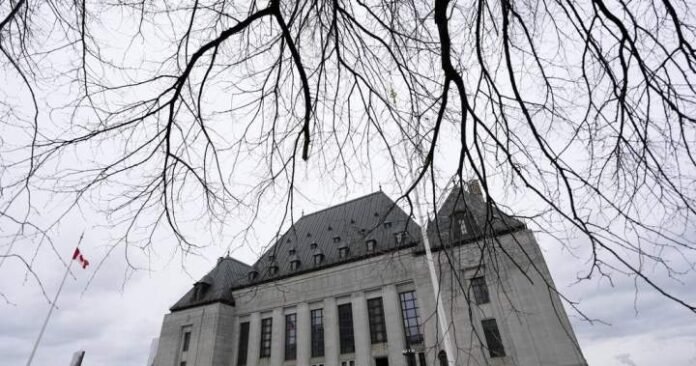


A challenge of Quebec’s secularism law, known as Bill 21, will be heard at the Supreme Court of Canada beginning Monday, with the notwithstanding clause at the heart of arguments.
The case stems from a law passed in June 2019 by the Quebec government led by François Legault, which bans certain public-sector workers — including teachers, police officers and judges — from wearing religious symbols on the job in the name of state neutrality.

Get breaking National news
Get breaking Canada news delivered to your inbox as it happens so you won’t miss a trending story.
The Coalition Avenir Québec government pre-emptively invoked the notwithstanding clause of the Canadian Charter of Rights and Freedoms to shield the law from most court challenges over fundamental rights violations.
Legal experts say the arguments will centre on the criteria for suspending rights more than on state secularism.
Quebec Superior Court and the Quebec Court of Appeal have mostly sided with the provincial government in its rulings, while also criticizing how the government has employed the notwithstanding clause.
Groups including the National Council of Canadian Muslims, the Canadian Civil Liberties Association and the World Sikh Organization will meet with reporters today ahead of the hearings, which are expected to run four days.
© 2026 The Canadian Press