

Given the importance of diversification in today’s environment, there’s certainly a good use case to be made for building out a more balanced portfolio via commodities exposure. One particular area of the commodities market that could offer a compelling use case is rare earths.
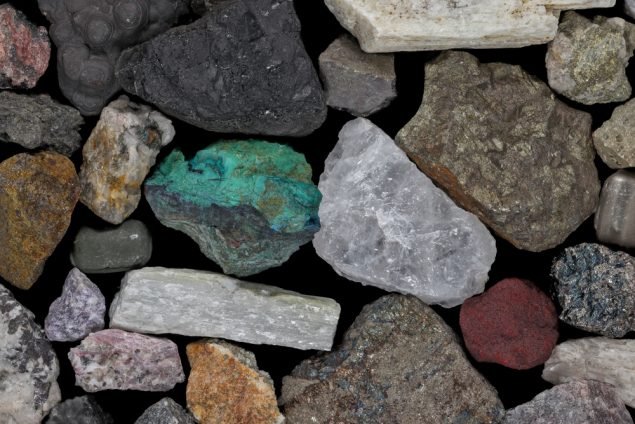
A group of 17 different minerals, rare earths are utilized in a variety of different industries. This includes applications in defense, AI, clean energy technology, and many others. These broad use cases help to ensure that rare earths have plenty of different purposes to help justify their valuations.
See more: Why Invest in Rare Earths? Consider These Three Use Cases
It’s also important to note that China currently holds a dominant position in the rare earths market. In fact, in a recent interview with James Connor of Bloor Street Capital, Jacob White, CFA, director, ETF product management at Sprott Asset Management explained that China accounts for roughly 69% of production and mining for rare earths, and 91% of processing.
Given China’s chokehold on the field of rare earths, some may be wondering: is it even worth investing in rare earth companies outside of China? During the interview, White explained why ex-China rare exposure may actually make more sense right now.
Favorable Federal Policy Works in REXC’s Favor
According to White, many different countries are now looking to bolster their critical mineral agreements and construct new supply chains. By doing so, these new deals and plans are creating billions of dollars in funding for rare earth companies across the globe.
“Having these governments as partners and building these supply chains comes with additional benefits,” White added. “For example, they’re expediting permitting, where permitting takes many years, in order to be able to go from the discovery of your rare earth to building a mine that can produce. They’re expediting and reducing these regulatory hurdles.”
See more: Metals in Motion: Why Rare Earths Are the New Strategic Frontier
For those looking to dip into the opportunity set that ex-China rare earths can offer, the Sprott Rare Earths Ex-China ETF (REXC) is a viable option. REXC’s approach focuses on rare earths companies outside of China, and instead invests in different businesses across the globe.
As momentum and favorable policy continue to grow across the globe for independent rare earth supply chains, REXC’s portfolio will offer a compelling use case in the months to come. In the meantime, investors who are looking to both diversify and bet on favorable policy tailwinds will likely find plenty of applications for REXC’s stock selections.
For more news, information, and analysis, visit the Gold/Silver/Critical Minerals Content Hub.
Disclosures
An investor should consider the investment objectives, risks, charges, and expenses carefully before investing. To obtain a Prospectus, which contains this and other information, contact your financial professional or call 888.622.1813. Read the Prospectus carefully before investing, which can also be found by clicking one of the links below.
Past performance is no guarantee of future results. One cannot invest directly in an index.
Funds that emphasize investments in small/mid-cap companies will generally experience greater price volatility. Diversification does not eliminate the risk of investment losses. ETFs are considered to have continuous liquidity because they allow an individual to trade throughout the day. A higher portfolio turnover rate may indicate higher transaction costs and may result in higher taxes when Fund shares are held in a taxable account. These costs, which are not reflected in annual fund operating expenses, affect the Fund’s performance.
Sprott Asset Management USA, Inc. is the Investment Adviser to the ETFs. ALPS Distributors, Inc. is the Distributor for the ETFs and is a registered broker-dealer and FINRA Member. ALPS Distributors, Inc. is not affiliated with Sprott Asset Management USA, Inc. or VettaFi.
Exchange Traded Funds (ETFs): SETM, LITP, URNM, URN, COPP, COPJ, NIKL, SGDM, SGDJ, SLVR, GBUG, METL
Physical Bullion Funds: PHYS, PSLV, CEF, and SPPP.
Gold and precious metals are referred to with terms of art like store of value, safe haven and safe asset. These terms should not be construed to guarantee any form of investment safety. While “safe” assets like gold, Treasuries, money market funds and cash generally do not carry a high risk of loss relative to other asset classes, any asset may lose value, which may involve the complete loss of invested principal.