


The Advance Retail Sales Report from the Census Bureau showed consumer spending was down less than feared in January. Headline sales slipped 0.2%, a step down from December’s flat reading but better than the projected 0.3% decline.
For an inflation-adjusted perspective on retail sales, take a look at our Real Retail Sales commentary.
Here is the introduction from today’s report:
Advance Estimates of U.S. Retail and Food Services
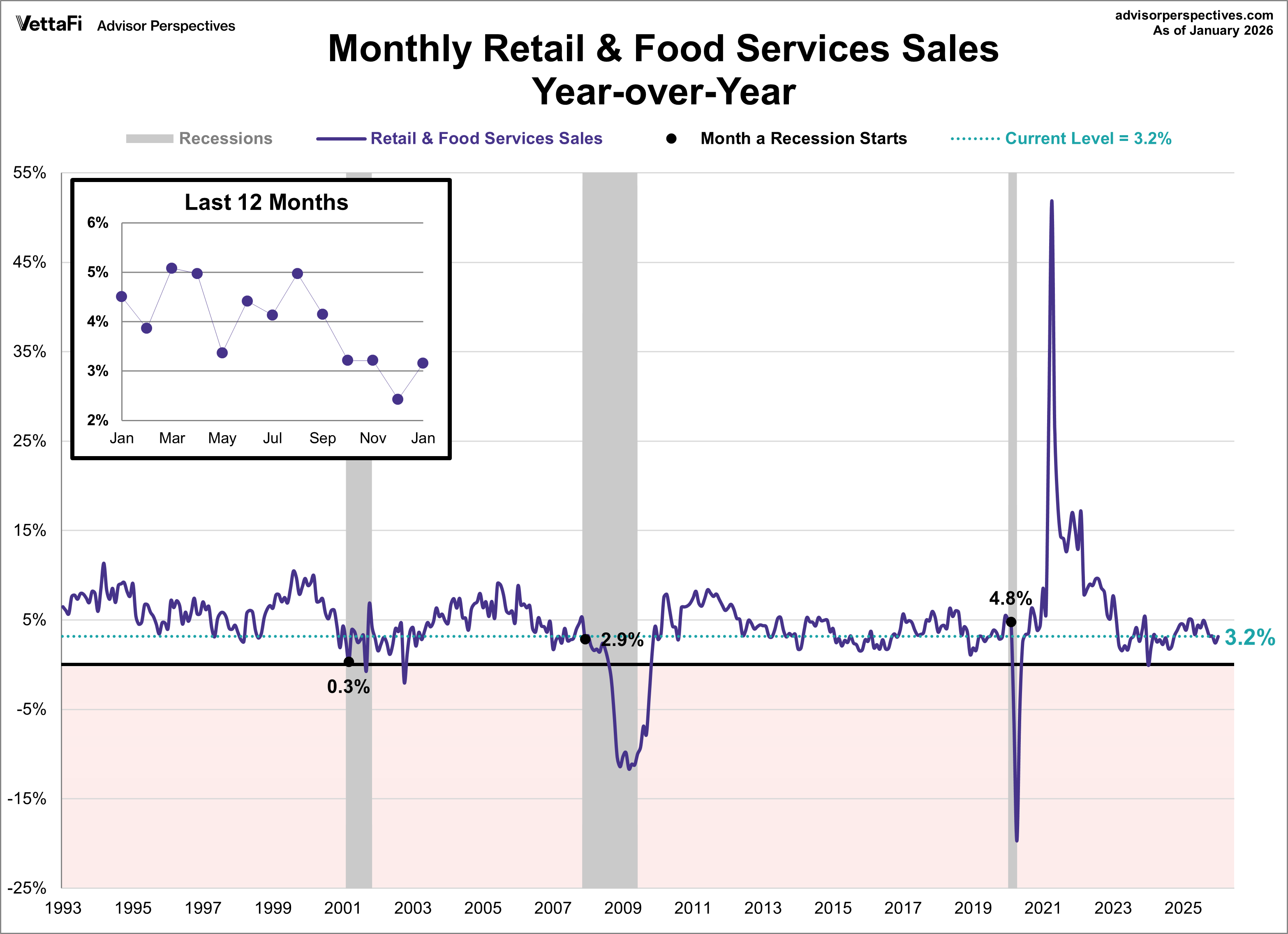
Advance estimates of U.S. retail and food services sales for January 2026, adjusted for seasonal variation and holiday and trading-day differences, but not for price changes, were $733.5 billion, down 0.2 percent (±0.4 percent)* from the previous month, and up 3.2 percent (±0.5 percent) from January 2025. Total sales for the November 2025 through January 2026 period were up 2.9 percent (±0.4 percent) from the same period a year ago. The November 2025 to December 2025 percent change was unrevised from virtually unchanged (±0.3 percent)*.Retail trade sales were down 0.2 percent (±0.5 percent)* from December 2025, and up 3.0 percent (±0.5 percent) from last year. Nonstore retailers were up 10.9 percent (±1.4 percent) from last year, while food service and drinking places were up 3.9 percent (±1.8 percent) from January 2025.
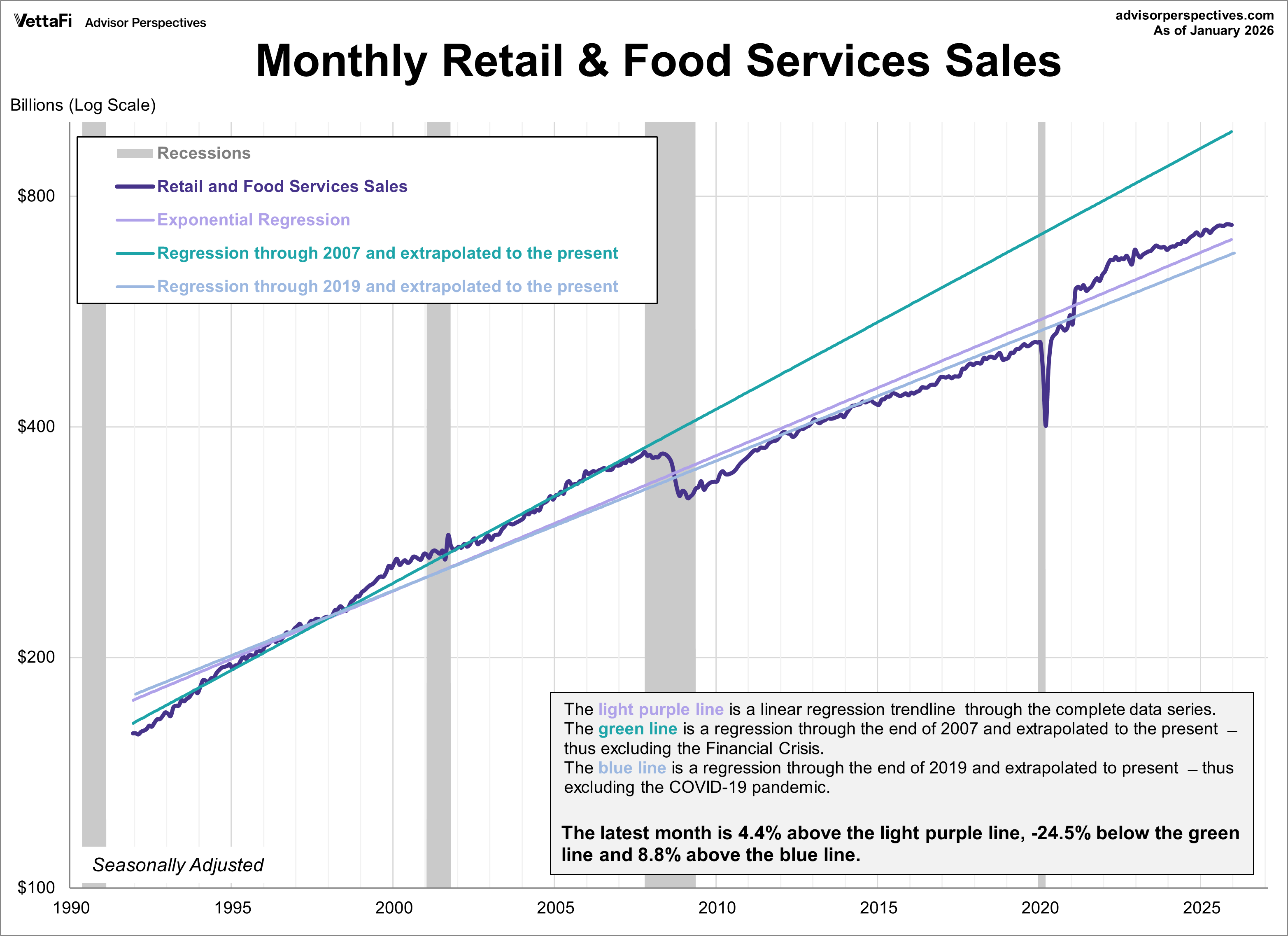
The chart below is a log-scale snapshot of retail sales since the early 1990s. The three exponential regressions through the data help us to evaluate the long-term trend of this key economic indicator.
- The light purple line is a linear regression through the complete data series.
- The green line is a regression from the start of the series through the end of 2007 and then extrapolated to the present – thus excluding the Financial Crisis.
- The blue line is a regression from the start of the series through the end of 2019 and then extrapolated to the present – thus excluding the COVID-19 pandemic.
Monthly retail sales have been above the light purple and blue line since March 2021, signaling increased consumer spending that was most likely pent up as a result of the pandemic.
The year-over-year percent change provides another perspective on the historical trend. Current retail sales are up 3.2% compared to one year ago. Here is the headline series with a callout to the most recent 12 months.
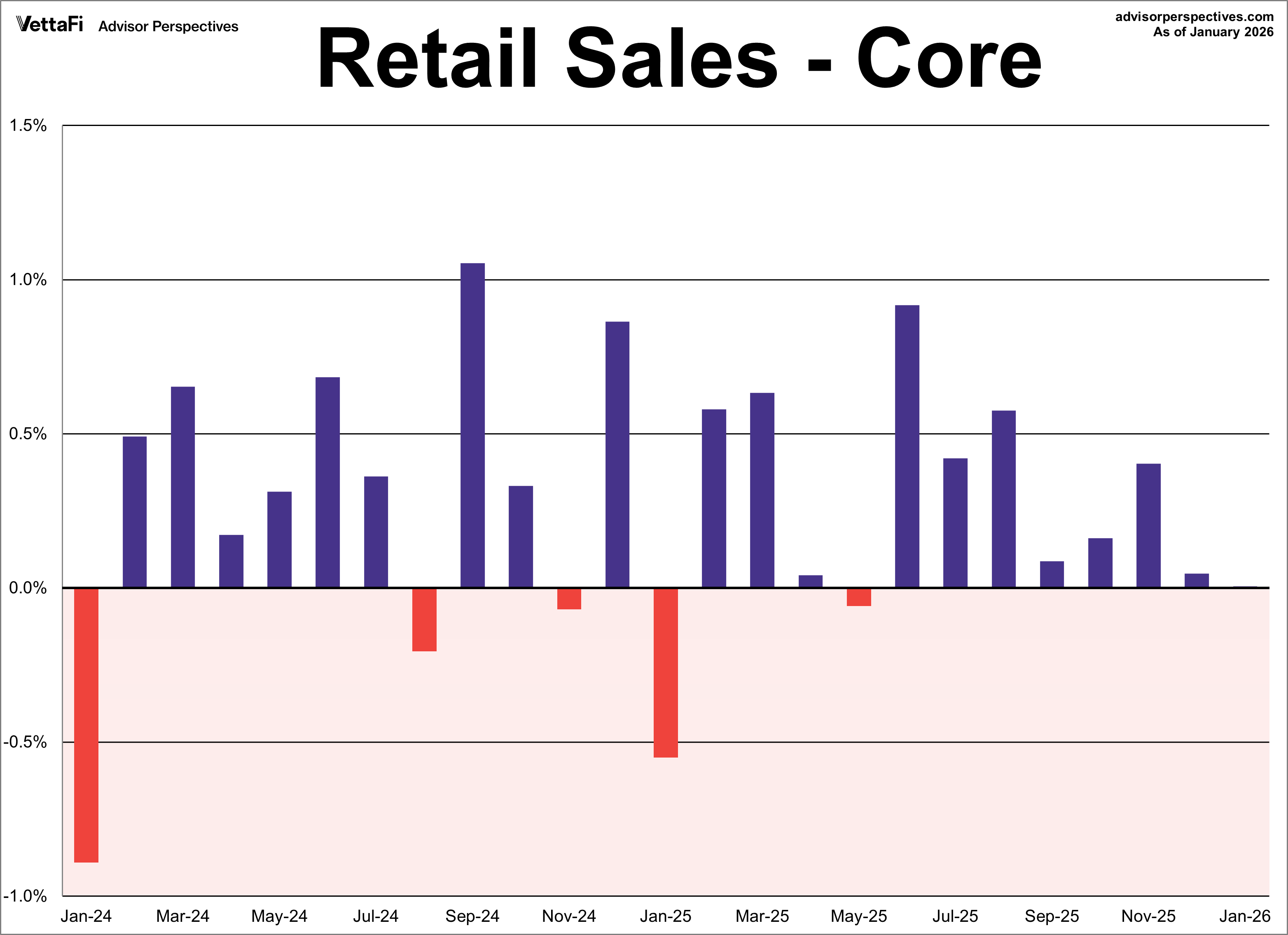
Core Retail Sales
Core sales (ex Autos) were flat in January, unchanged from December’s 0.0% reading and was lower than the expected 0.1% growth.
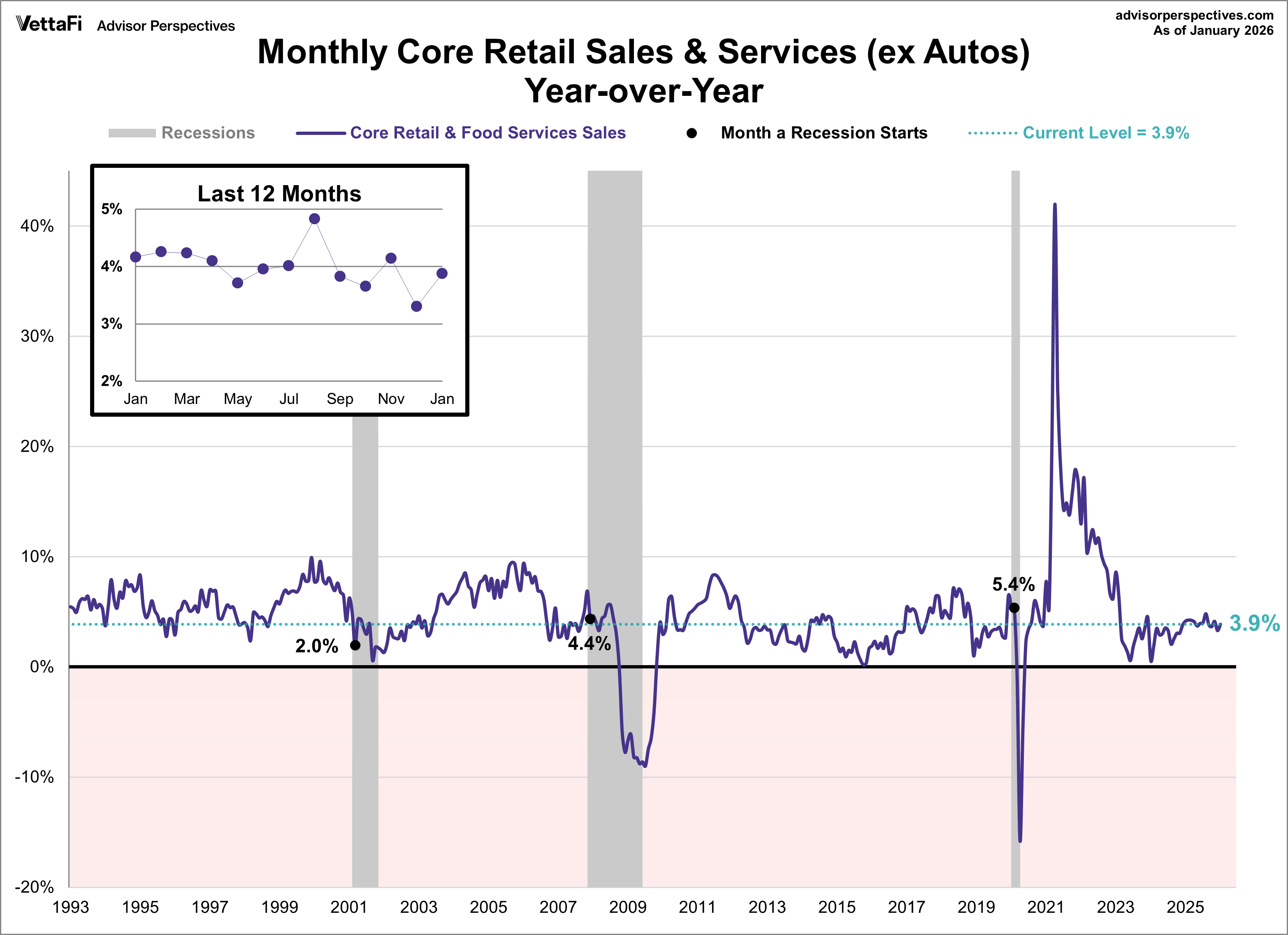
Core retail sales are up 3.9% compared to one year ago. Here is the year-over-year chart of core retail sales with a callout to the most recent 12 months.
Retail Sales: “Control” Purchases
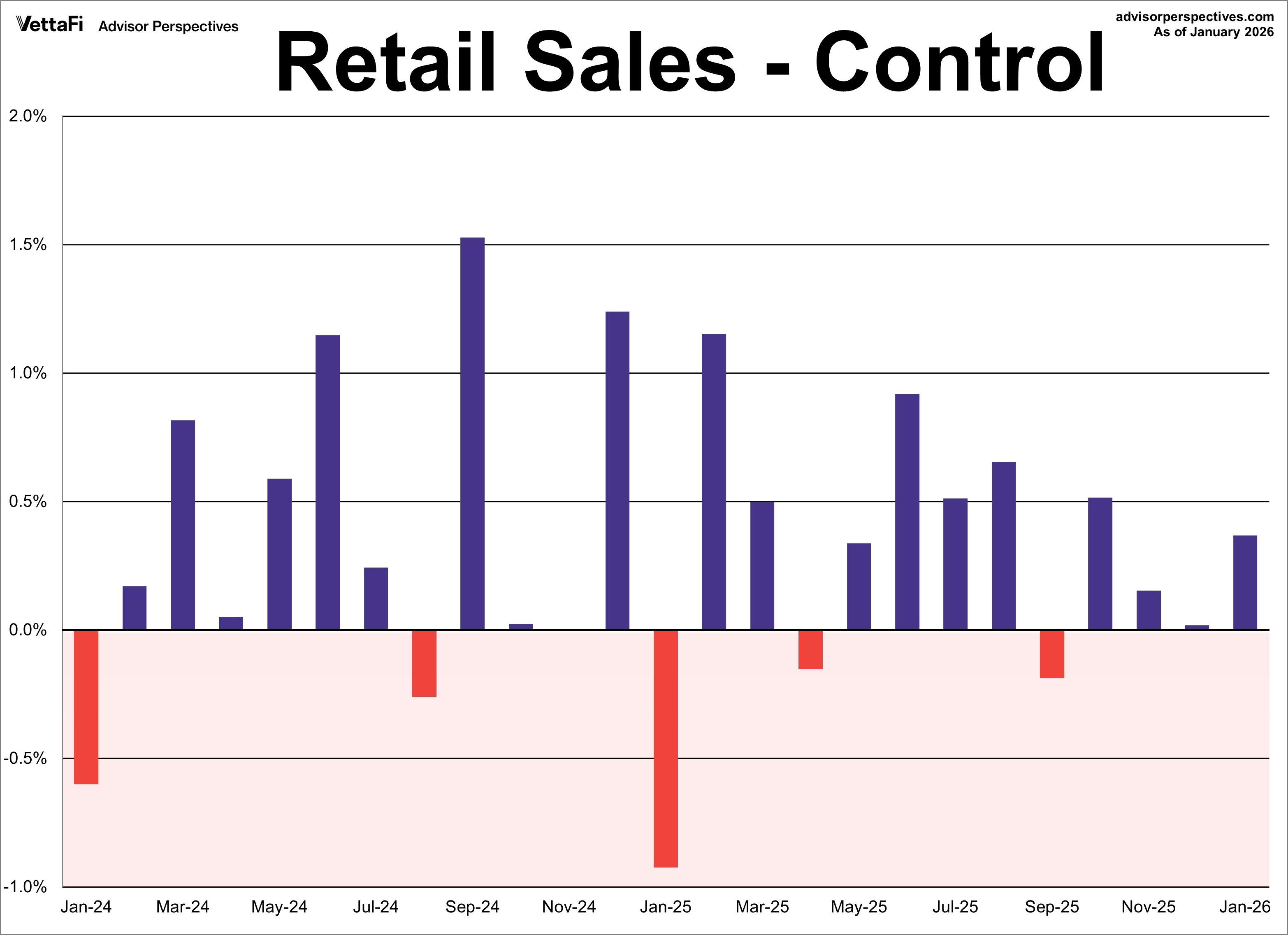
The next two charts illustrate retail sales “control” purchases, which is an even more “core” view of retail sales. This series excludes motor vehicles & parts, gasoline, building materials as well as food services & drinking places. The popular financial press typically ignores this series, but it’s a more consistent and reliable reading of the economy. Retail sales control purchases rose 0.3% in January. This is up from December’s flat reading and was higher than the expected 0.2% growth in control sales.
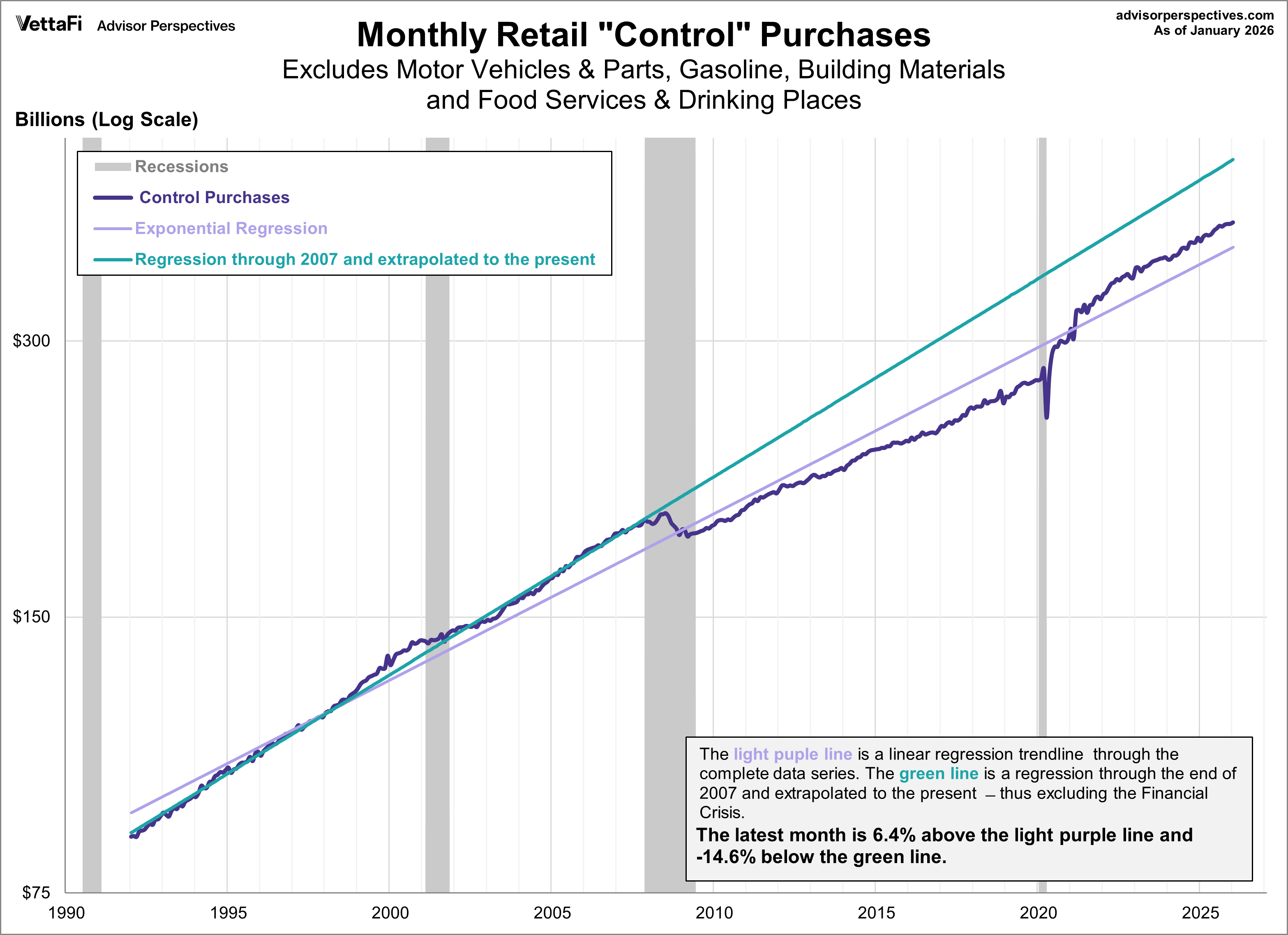
Similar to the retail sales snapshot chart earlier, the chart below is a log-scale snapshot of control purchases since the early 1990s and includes two of the exponential regressions previously mentioned.
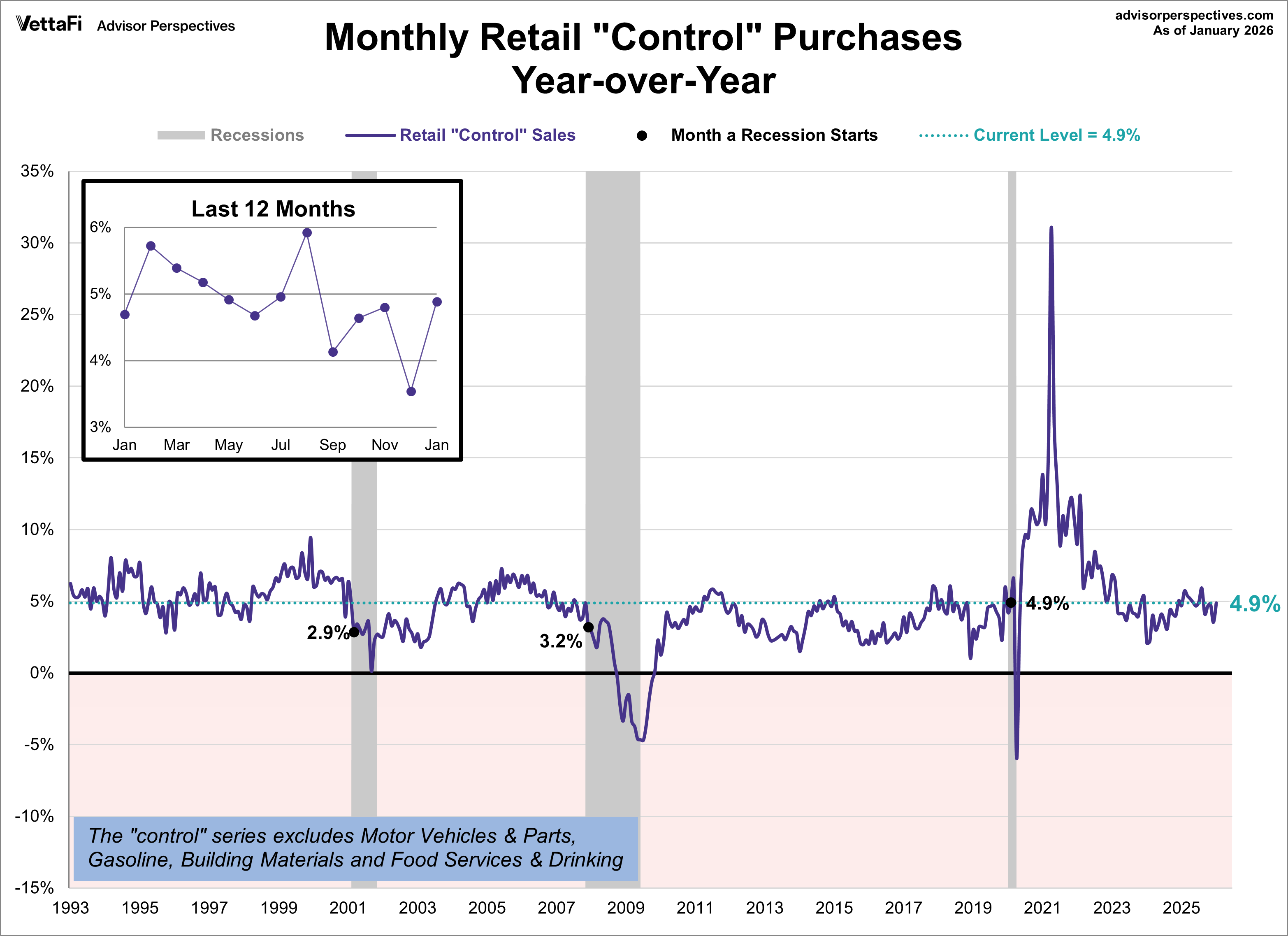
Here is the same series year-over-year. Current control purchases are up 4.9% compared to one year ago.
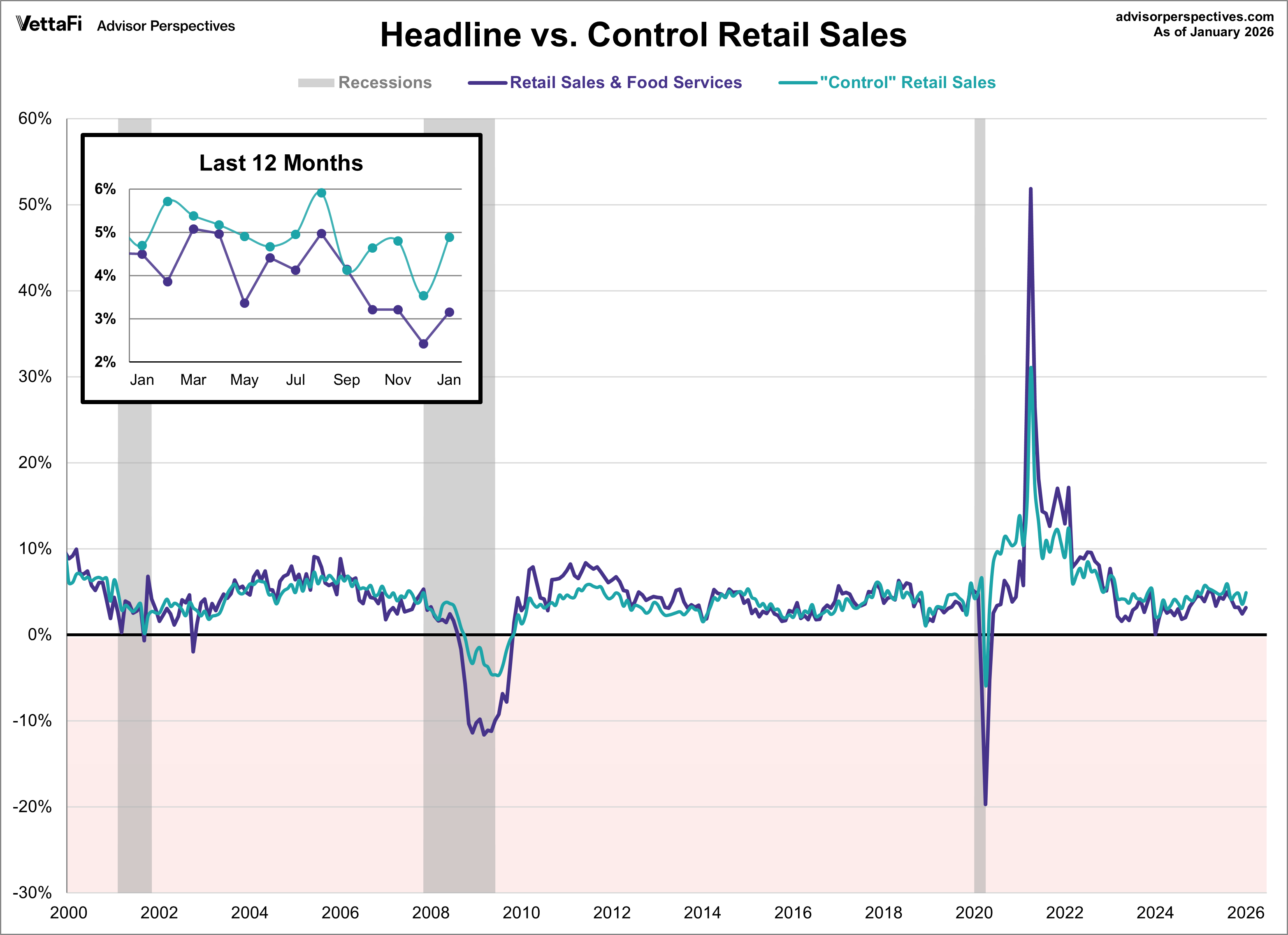
For a better sense of the reduced volatility of the “control” series, here is a YoY overlay with the headline retail sales. Note that the two series follow each other closely, but headline sales have more extreme highs and lows than the control series.
Retail sales will impact interest in the SPDR S&P Retail ETF (XRT), VanEck Retail ETF (RTH), Amplify Online Retail ETF (IBUY), and ProShares Online Retail ETF (ONLN).
vettafi.com is owned by VettaFi LLC (“VettaFi”). VettaFi is the index provider for IBUY for which it receives an index licensing fee. However, IBUY is not issued, sponsored, endorsed, or sold by VettaFi. VettaFi has no obligation or liability in connection with the issuance, administration, marketing, or trading of IBUY.
Originally published on Advisor Perspectives.