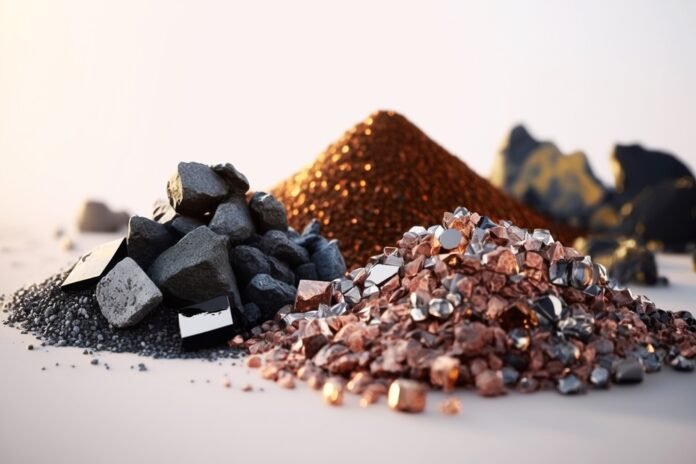


More countries continue to prioritize critical minerals, making the Sprott Active Metals & Miners ETF (METL) a prime opportunity as an ETF that can capture future upside. Furthermore, the fund presents a unique offering for prospective investors with its active management.
“This differs from what we see in the market, where other ETF strategies may only give exposure to companies domiciled in the U.S. or lack exposure to miners that extract resources such as uranium, gold and silver, which comprise a significant portion of the mining industry,” said Steve Schoffstall, director of ETF product management at Sprott Asset Management during a Nasdaq “Just For Funds” interview.
India and Canada are the latest countries to agree to deals that would strengthen supply chains for critical minerals. As the world continues to rely more heavily on electricity to power various applications, the push for metals like silver and copper become crucial.
“A lot of it comes down to greater demand for electricity,” Schoffstall said. “If you were to look out through 2050, there’s about a 170% increase in the expected electricity demand. There are several areas from which that comes.”
Schoffstall mentioned artificial intelligence (AI), which has obviously been a strong investment theme this year. Strength in AI can spill over into critical minerals that are needed to build the infrastructure as data centers require copious amounts of electricity.
Canada Exposure and Management Experience
In addition to India, Japan is another country that’s been collaborating with Canada on critical minerals. Relying on Canada will be paramount for other nations who are trying to reduce the reliance on China for critical minerals.
If more nations strike deals with Canada, that puts METL in a strong position with its geographic concentration on Canadian equities. As of October 31, just over 60% of the fund is allocated to Canada, with the United States in second with just over 16%.
Furthermore, the portfolio managers of METL are well-equipped with the requisite industry knowledge and experience to capture future upside. They take a boots-on-the-ground approach in order to gain key insights on the metals industry.
“The team brings experienced investment expertise to the table, conducting over 200 management team meetings and up to 30 site visits each year,” Schoffstall said. “They’ve visited over 40 countries, getting on the ground and talking to all levels of management. Not just senior management, but also the site managers and people in the operations at those individual mine sites.”
For more news, information, and analysis, visit the Gold/Silver/Critical Minerals Content Hub.
An investor should consider the investment objectives, risks, charges, and expenses carefully before investing. To obtain a Prospectus, which contains this and other information, contact your financial professional or call 888.622.1813. Read the Prospectus carefully before investing, which can also be found by clicking one of the links below.
Past performance is no guarantee of future results. One cannot invest directly in an index.
Funds that emphasize investments in small/mid-cap companies will generally experience greater price volatility. Diversification does not eliminate the risk of investment losses. ETFs are considered to have continuous liquidity because they allow an individual to trade throughout the day. A higher portfolio turnover rate may indicate higher transaction costs and may result in higher taxes when Fund shares are held in a taxable account. These costs, which are not reflected in annual fund operating expenses, affect the Fund’s performance.
Sprott Asset Management USA, Inc. is the Investment Adviser to the ETFs. ALPS Distributors, Inc. is the Distributor for the ETFs and is a registered broker-dealer and FINRA Member. ALPS Distributors, Inc. is not affiliated with Sprott Asset Management USA, Inc. or VettaFi.
Exchange Traded Funds (ETFs): SETM, LITP, URNM, URN, COPP, COPJ, NIKL, SGDM, SGDJ, SLVR, GBUG, METL
Physical Bullion Funds:PHYS, PSLV, CEF, and SPPP.
Gold and precious metals are referred to with terms of art like store of value, safe haven and safe asset. These terms should not be construed to guarantee any form of investment safety. While “safe” assets like gold, Treasuries, money market funds and cash generally do not carry a high risk of loss relative to other asset classes, any asset may lose value, which may involve the complete loss of invested principal.